
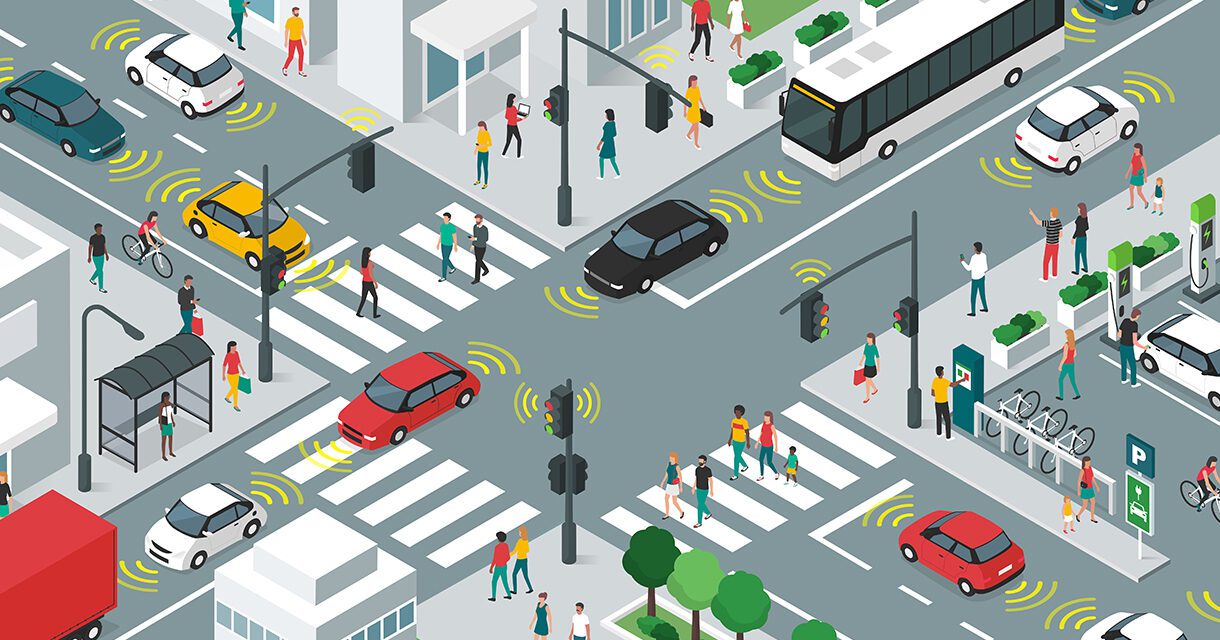
IoT in transportation worldwide are becoming smarter through the Internet of Things. IoT enables vehicles, infrastructure, and traffic management systems to communicate and share data in real time. This connectivity improves safety, reduces congestion, and enhances operational efficiency.
IoT in transportation
IoT-powered transportation systems support smart mobility solutions, autonomous vehicles, and efficient logistics operations. integrates sensors, connectivity, and data analytics to create smart mobility, enhancing safety and efficiency via real-time data exchange
- Sensors and Devices: Embedded sensors monitor vehicle performance, driver behavior, and environmental conditions.
- Connectivity (V2X): Ensures data transmission between vehicles (V2V), infrastructure (V2I), pedestrians (V2P), and networks (V2N).
- Intelligent Traffic Management: IoT-enabled traffic lights reduce congestion, as demonstrated in Barcelona, which saw a 21% decrease in travel times.
- Predictive Maintenance: Real-time diagnostics (tire pressure, engine temperature) allow for proactive, rather than reactive, repairs.
What is IoT in Transportation?
involves connected devices and sensors that monitor and manage vehicles, infrastructure, and logistics systems.
Applications include:
- Connected vehicles
- Smart traffic management
- Fleet monitoring
- Logistics optimization
Key Applications of IoT
Connected Vehicles
Vehicles equipped with sensors communicate with other vehicles and infrastructure to improve safety.
Smart Traffic Management
Sensors monitor traffic flow and adjust signals to reduce congestion.
Fleet Management
Businesses track vehicle location, fuel consumption, and performance.
Predictive Maintenance
IoT detects mechanical issues before failures occur.
Smart Parking Systems
Sensors identify available parking spaces.
Benefits of IoT Transportation
Improved Safety
Real-time monitoring prevents accidents.
Reduced Traffic Congestion
Smart systems optimize traffic flow.
Cost Efficiency
Fuel optimization reduces operational costs.
Better Customer Experience
Real-time tracking improves delivery services.
Challenges in IoT Transportation Systems
- Cybersecurity risks
- Infrastructure costs
- Data privacy concerns
- Integration complexity
Future of Smart Transportation
Future transportation systems will include autonomous vehicles, intelligent infrastructure, and AI-driven traffic management.
Conclusion
IoT is transforming transportation by improving safety, efficiency, and mobility. Connected transportation systems will play a major role in future smart cities.


