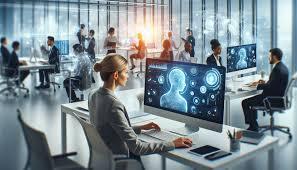
The AI and future jobs 2026 is rapidly evolving, and artificial intelligence is at the center of this transformation. By 2026, AI will significantly change how people work, what skills are required, and how organizations structure their teams.By 2026, Artificial Intelligence (AI) will move from experimental, isolated tools to a foundational, embedded component of the global workforce, fundamentally transforming job roles rather than merely replacing them. The transition will shift focus toward human-AI collaboration, with AI handling routine, data-heavy tasks, allowing humans to focus on higher-value creative and strategic work.
AI and future jobs 2026
Contrary to popular fears, AI will not simply replace jobs—it will redefine them. Repetitive and rule-based tasks will increasingly be automated, while roles requiring creativity, emotional intelligence, and strategic thinking will grow in importance.
New job categories will emerge, such as AI trainers, prompt engineers, AI ethics officers, and human-AI interaction designers. These roles will focus on guiding, monitoring, and improving AI systems rather than competing with them.
Upskilling and reskilling will be essential. By 2026, employees will need a combination of technical literacy and soft skills. Understanding how AI systems work, interpreting AI outputs, and collaborating with intelligent tools will become basic workplace requirements.
Remote and hybrid work will be enhanced by AI-powered collaboration tools. AI will manage schedules, analyze productivity patterns, and even suggest optimal workflows for teams across the globe.
Education systems will also adapt. AI-driven personalized learning platforms will help individuals acquire skills faster and more efficiently. Continuous learning will replace traditional one-time education models.
From HR recruitment to performance management, AI will streamline operations while improving fairness and efficiency. However, organizations must ensure ethical AI use to prevent bias and discrimination.
By 2026, success in the workforce will depend on how well humans and AI work together. Those who embrace AI as a partner rather than a threat will lead the future economy.