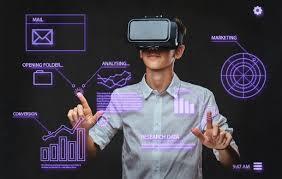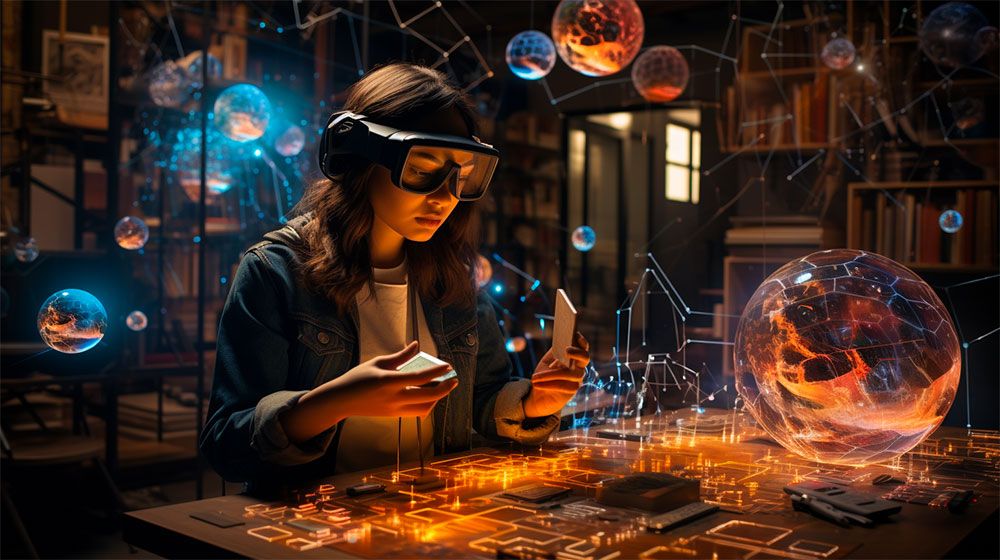
Future of spatial computing Spatial computing is moving rapidly from experimental to essential. As hardware improves and software ecosystems mature, spatial experiences are becoming more integrated into daily life.Spatial computing is transitioning from a niche technology to the foundational operating system of the next digital era, merging physical and digital worlds into a single, interactive, three-dimensional space
Key Trends Driving Growth
Advancements in AI, 5G connectivity, and cloud computing are accelerating spatial computing adoption. Lightweight headsets and natural user interfaces are making experiences more intuitive.
Convergence with AI
AI enhances spatial computing by enabling object recognition, gesture control, and intelligent automation. Together, they create systems that understand and respond to human intent.
Challenges to Overcome
Barriers include hardware costs, content creation complexity, and ethical concerns around privacy and surveillance. Addressing these challenges is critical for long-term adoption.
Business and Social Impact
Spatial computing will reshape how we work, socialize, and access information. Virtual offices, immersive commerce, and digital twins will become mainstream.
Preparing for a Spatial Future
Organizations that invest early in spatial computing skills and infrastructure will be better positioned to innovate. Understanding this technology today is a strategic advantage.
Final Thoughts
Spatial computing represents the next evolution of human-computer interaction. Its future is immersive, intelligent, and deeply connected to the physical world
Future of spatial computing
- Infinite Canvas: Digital applications will exist around users in 3D, moving beyond the physical boundaries of a screen.
- Natural Interaction: Instead of clicking or tapping, users will gaze to select and tap fingers to trigger actions, creating a more intuitive, “touchless” experience.
- Operational Optimization: In manufacturing, companies will simulate production layouts and predict equipment failures, reducing downtime.
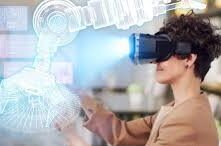
- Virtual Prototyping: Designers will use MR to project 3D models onto physical surfaces, allowing for instant, collaborative iterations without building costly physical prototypes.