
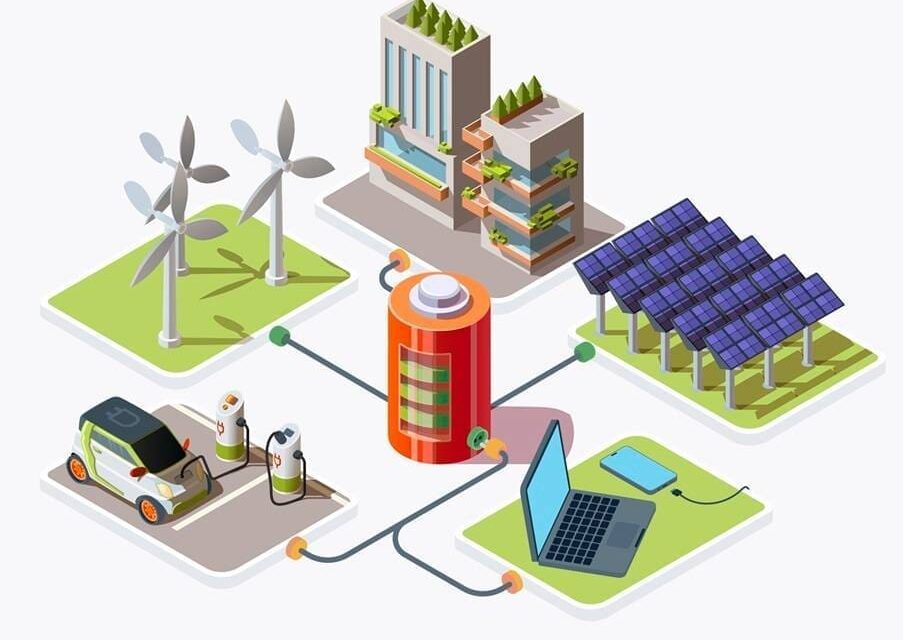
IoT in energy management continues to rise globally, requiring more efficient and sustainable energy management solutions. IoT technology enables real-time monitoring, optimization, and automation of energy systems.
Connected energy systems improve efficiency, reduce costs, and support renewable energy integration.IoT in energy management transforms traditional power grids into intelligent, data-driven, and sustainable systems. By using IoT sensors, smart meters, and connected devices, utilities can monitor real-time demand, enhance distribution efficiency, and integrate renewable energy sources, resulting in over 20% efficiency gains, reduced outages, and better load balancing.
IoT in energy management
- Smart Metering and Monitoring: IoT-enabled meters provide detailed, real-time consumption data, replacing traditional manual reading and allowing for proactive outage detection.
- Dynamic Demand Response: Sensors monitor energy consumption patterns to match supply with demand instantly, reducing stress on the grid during peak times.
- Renewable Energy Integration: IoT connects and monitors distributed energy resources (like solar panels and wind turbines), managing their intermittent output.
- Increased Efficiency and Reduced Waste: Real-time data minimizes transmission losses and optimizes energy use.
- Enhanced Reliability: Automatic, real-time fault detection and faster restoration times.
Key challenges to widespread adoption include cybersecurity risks, the need for increased standardization, and the high initial investment required for infrastructure upgrades.
Applications of IoT in Energy
Smart Grids
Monitor electricity distribution and demand.
Energy Monitoring Systems
Track energy consumption in buildings.
Renewable Energy Management
Optimize solar and wind energy usage.
Predictive Maintenance
Detect faults in power systems.
Benefits of IoT in Energy Management
Energy Efficiency
Optimized energy usage reduces waste.
Cost Savings
Automated systems reduce expenses.
Environmental Sustainability
Lower energy consumption reduces emissions.
Reliable Power Supply
Real-time monitoring prevents outages.
Challenges in Energy IoT
- Infrastructure investment
- Cybersecurity risks
- Data management complexity
Future of IoT in Energy
Future systems will integrate AI, decentralized energy networks, and advanced monitoring technologies.
Conclusion
IoT plays a vital role in modern energy management, enabling efficient and sustainable power systems.


