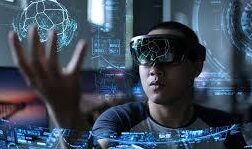
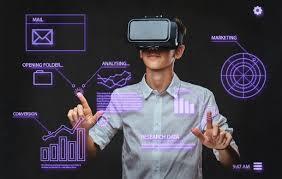
Mixed reality in healthcare (MRH) is transforming healthcare by merging digital medical data with the physical world. Unlike AR or VR alone, MR allows digital content to interact with real environments, creating powerful tools for diagnosis, treatment, and education.Mixed Reality (MR) is revolutionizing healthcare by blending physical and digital worlds to enhance surgical precision, medical training, and patient care.
- Advanced Surgical Assistance & Planning: Surgeons can project 3D reconstructions of CT or MRI scans onto a patient during surgery, allowing them to see “through” the body for better navigation and reduced, less-invasive, or safer procedures.
- Revolutionized Medical Training: Medical students and nurses can practice intricate procedures in a, safe, virtual environment, reducing dependence on cadavers and improving skill retention through immersive, interactive simulations.
- Increased Safety: Reduced complication rates due to better preoperative rehearsal and real-time guidance.
- Efficiency: Streamlined workflows in operating rooms and faster training for medical professionals.
Mixed reality in healthcare
Enhancing Medical Training
Medical students can explore interactive 3D anatomy models overlaid onto real-world spaces. These models can be manipulated, enlarged, and examined from any angle—providing deeper understanding than textbooks.
Surgical Planning and Precision
Surgeons use MR to visualize patient-specific anatomy before and during procedures. This improves accuracy, reduces operation times, and enhances patient safety.
Patient Education and Engagement
MR helps patients better understand diagnoses and treatment plans by visualizing conditions in an accessible way. Informed patients are more confident and engaged in their care.
Collaboration and Remote Expertise
MR enables specialists to collaborate across distances, sharing real-time views and insights. This is particularly valuable in complex or rare medical cases.
Challenges and Ethics
Healthcare MR must address data privacy, regulatory compliance, and device sterilization. However, ongoing innovation is steadily resolving these concerns.
The Future of MR in Medicine
As MR technology matures, it will become a standard tool in hospitals and clinics, redefining how care is delivered and taught.