
Types of Data Solutions serve the same purpose. Depending on business size, industry, and goals, organizations adopt different data solutions to handle specific challenges. Understanding the various types helps businesses choose the right approach.Data solutions have evolved from centralized, structured data warehouses (reporting) to flexible data lakes (raw data) and AI-powered analytics,
enabling faster, predictive, and automated decision-making. Modern, cloud-native data platforms integrate these technologies to turn massive datasets into actionable insights through AI-driven automation and intelligent analytics, transforming how businesses operate.
Types of Data Solutions
- Cloud-Native & Elastic: Platforms are increasingly using cloud-based, serverless architectures to balance cost and performance.
- Data Governance: Stronger, AI-driven data governance is essential to ensure compliance and data accuracy.
- DataOps: Adoption of DataOps frameworks to improve quality and reduce cycle times for data analytics.
- Data Warehousing Solutions
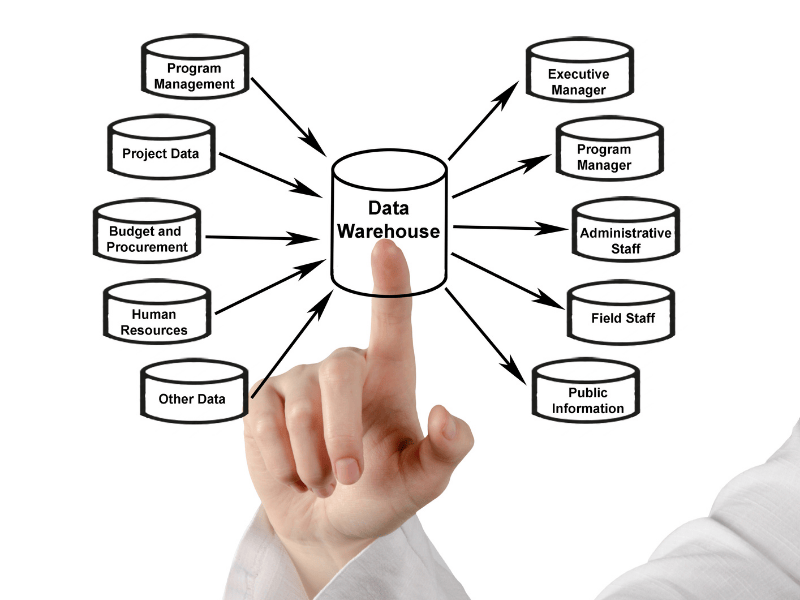
A data warehouse stores structured data from multiple sources in a centralized location.
Key Features
- Structured and organized
- Optimized for reporting
- Historical data storage
Examples: Amazon Redshift, Snowflake, Google BigQuery
Best For: Business reporting and analytics
- Data Lake Solutions
A data lake stores raw, unstructured, and semi-structured data.
- Data Warehouse: Stores structured, processed data from various sources, optimized for business intelligence (BI) and reporting.
- Types: Enterprise (EDW), Cloud (e.g., Snowflake), Real-time, and Virtual.
- Data Mart: A subset of a data warehouse focused on a specific business department or area, allowing for faster, targeted analysis.
Benefits
- Handles large data volumes
- Flexible storage
- Supports AI and big data analytics
Best For: Big data and machine learning projects
- Business Intelligence (BI) Solutions
BI tools transform data into dashboards and reports.
Popular Tools: Power BI, Tableau, Looker
Use Case: Performance tracking and KPI monitoring
- AI and Advanced Analytics Solutions
These solutions use machine learning and predictive analytics.
Benefits
- Forecast trends
- Automate decisions
- Detect anomalies
- Cloud-Based Data Solutions
Cloud data solutions offer scalability, security, and cost efficiency.
Conclusion
Choosing the right data solution depends on business needs, data complexity, and growth plans. Many organizations use a hybrid approach for maximum flexibility.


