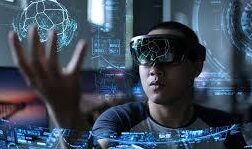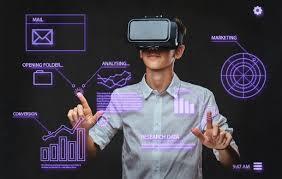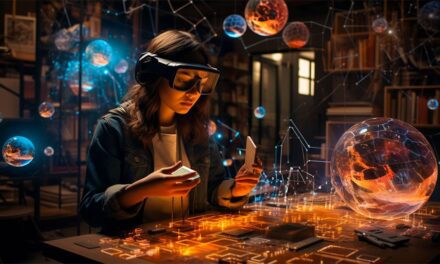
Virtual reality training (VR) is redefining how people learn by offering immersive, risk-free environments where skills can be practiced repeatedly. Unlike traditional training methods, VR places learners inside realistic simulations, allowing them to learn by doing.
Virtual reality (VR) training is the future of workforce development because it accelerates skill acquisition, boosts engagement, and increases knowledge retention by up to 75% compared to traditional methods.
- Improved Knowledge Retention & Learning Speed: VR provides immersive, hands-on experience, allowing employees to learn faster. For example, Walmart reduced new hire training time by 96%
Virtual reality training
Why VR Training Works
VR training activates multiple senses, which improves memory retention and understanding. Learners are not passive observers—they actively participate in scenarios that mirror real-world challenges.This experiential approach has proven to be more engaging and effective than classroom-based or video-based training.Studies consistently show that VR learners complete training faster and retain information longer compared to traditional methods.
Use Cases Across Industries
In healthcare, VR allows surgeons to practice procedures without risk to patients. In aviation, pilots can simulate emergency scenarios safely. In corporate environments, employees can develop leadership and communication skills through role-playing simulations.
Safety and Cost Benefits
VR eliminates the risks associated with physical training environments. Dangerous scenarios—such as fire response or heavy machinery operation—can be practiced safely. Over time, VR reduces costs related to equipment damage, travel, and instructor-led sessions.
Scalability and Consistency
Once developed, VR training modules can be deployed globally with consistent quality. This ensures that all employees receive the same level of training regardless of location.
Overcoming Barriers to Adoption
While VR hardware costs were once prohibitive, prices have dropped significantly.
The Long-Term Impact
VR training is not just a trend—it’s becoming a standard for high-impact learning. As realism and interactivity continue to improve.