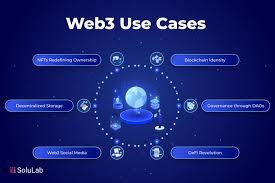
Web 3.0 use cases is not just theoretical — it is already transforming industries.Web 3.0, powered by blockchain, decentralization, and AI, is transforming industries by enabling trustless, user-owned digital ecosystems. Key real-world applications include Decentralized Finance (DeFi) for banking, Non-Fungible Tokens (NFTs) for asset ownership, DAOs for governance, and transparent supply chainsThese technologies enhance security, reduce intermediary costs, and boost data privacy.
user-centric internet where data and value are controlled by participants rather than central authorities.
Web 3.0 use cases
- Finance (DeFi): Decentralized Finance (DeFi) platforms like Uniswap, Aave, and Compound enable lending, borrowing, and trading without traditional banks. JPMorgan’s Onyx platform uses blockchain for faster, automated transaction reconciliation.These technologies enhance security, reduce intermediary costs, and boost data privacy.
- Supply Chain Management: Companies use blockchain for end-to-end traceability, increasing efficiency and reducing recall times, such as IBM and Walmart’s food safety tracking.
- Retail and Loyalty Programs: Brands like Starbucks (Odyssey) and Nike use NFTs to create unique loyalty programs and verify digital ownership of goods.
- Gaming and Metaverse: Players own, buy, and sell in-game assets as NFTs on platforms like Decentraland, allowing true ownership of digital, in-game property.
- Healthcare Data Management: Secure, interoperable blockchain systems, like those piloted in the EU, ensure patient records are private, tamper-proof, and accessible across providers.
Web 3.0 use cases
In finance, decentralized finance (DeFi) allows users to lend, borrow, and trade assets without banks. In gaming, players truly own in-game assets as NFTs. Supply chains use blockchain for transparent tracking. Healthcare benefits from secure, patient-controlled data. Web 3.0 enables trust, efficiency, and innovation across sectors, reducing reliance on intermediaries.These technologies enhance security, reduce intermediary costs, and boost data privacy.