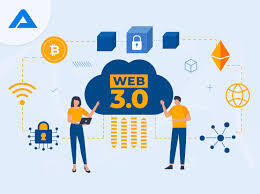
Web 3.0 vs Web 2.0 Web 2.0 to Web 3.0 marks one of the most important shifts in internet history. While both versions allow users to interact online, their underlying philosophies are completely different.Web 2.0 is the current, centralized internet dominated by platforms (social media, cloud) and user-generated content, where companies control data. Web 3.0 represents the next generation, focused on decentralization, user ownership, and blockchain technology, allowing users to control their own data and assets
Web 3.0 vs Web 2.0
- Ownership & Control: In Web 2.0, companies like Google, Meta, and Amazon own user data and platforms. In Web 3.0, users own and control their data, identity, and content via blockchain technology.
- Infrastructure: Web 2.0 relies on centralized servers. Web 3.0 is built on decentralized networks (blockchains) and decentralized applications (dApps).
Web 2.0 is dominated by centralized platforms. Companies like social networks and marketplaces control user data, content distribution, and monetization. In exchange for convenience, users give up privacy and ownership.
Web 3.0, on the other hand, focuses on decentralization. Data is stored across blockchain networks, and users retain control of their assets and identities.While Web 2.0 provides a fast, rich user experience, it often sacrifices data privacy. Web 3.0 aims to offer more security and transparency, though it is currently in a more nascent, slower, and complex development stage.
In Web 2.0, monetization benefits platforms. In Web 3.0, value is distributed among users, creators, and developers through tokens and decentralized governance.
Security also differs. Web 2.0 platforms are vulnerable to data breaches due to centralized servers. Web 3.0 reduces this risk by distributing data across multiple nodes.
While Web 2.0 excels in usability, Web 3.0 is catching up rapidly. The goal is to combine ease of use with freedom and transparency.While Web 2.0 provides a fast, rich user experience, it often sacrifices data privacy. Web 3.0 aims to offer more security and transparency, though it is currently in a more nascent, slower, and complex development stage.
While Web 2.0 provides a fast, rich user experience, it often sacrifices data privacy. Web 3.0 aims to offer more security and transparency, though it is currently in a more nascent, slower, and complex development stage.